
Mold Remediation
Containing mold growth comes first in mold remediation, followed by removal, cleaning and correction of the moisture problem that allowed it.
See mold remediationBoth the drywall facing and wall cavity can be affected. Correct the moisture, isolate removal and let the opened wall dry before repair.

Drywall that cannot be cleaned should come out after the source of water is found.
Dry and sound drywall may be suitable for cleaning. Removal is often needed when the porous, paper-faced board feels soft, stays wet or has swollen.
Mold removal from walls can involve cavity access, stud cleaning and drying. Use a written scope of work to distinguish painting after remediation from the remediation itself.

Have clearance testing completed by an independent assessor.
Confirm who completes removal, cleaning, drying, replacement and painting.
Before closing the cavity, ask how hidden moisture will be checked.
Discuss sealed waste, airflow and poly sheeting.
Hidden material, broad damage and contamination are reasons to bring in experienced help.
CDC says color does not show risk. Concentrate on removing material safely and correcting moisture.
Photograph conditions, report the leak and keep repair messages.
Leaks, exterior wall defects or condensation may explain growth that extends between rooms. Let measured data direct tear out.
Wet drywall can result from a plumbing leak or window leak. Peeling paint, soft wallboard and water stains support a moisture check.
Baseboards or wallpaper can cover mold on surfaces. Containment planning should come before pulling off those materials.
Leave the wall undisturbed. When safe to act, stop the source of water.
Call (844) 352-3560Fixr puts wall mold removal between $1,000 and $12,000 in its national guide. Using data credited to Angi, This Old House gives a national range for drywall mold removal of $1,000 to $20,000 for this work. These figures are not a quote, and repairs may cost separately.
No site visit was used for these ranges, which are drawn from published national cost guides. Your property price is set after an on-site assessment and should be explained before work starts.
Ask about cost: (844) 352-3560Homeowners insurance might apply when a sudden water event is covered. Common exclusions include long-term leakage and maintenance that was neglected.
California's Toxic Mold Protection Act includes a landlord written-disclosure section (Health and Safety Code 26147). By its own wording it applies only after the state adopts mold exposure standards, and the state health department has said it could not set them. Retain the work scope with pictures, moisture readings, invoices and independent verification.
Consider the event's cause and timing. A slow leak is not the same as a burst pipe.
Find out about the inspection, applicable sublimit and water source prior to removal.
Under California's housing law, visible mold found by a health officer or code enforcement officer can make a rental substandard. Renters can contact their local health or code enforcement department to ask for an inspection. Keep dated photos and repair messages.
The steps are inspection, isolation, material removal, cleaning and drying, with a post-remediation check at the end.
Test the staining with your moisture meter. Patterns can be flagged with a thermal imaging camera, but mold cannot be identified that way.
Set up controlled airflow with poly sheeting. Decide how sealed bags will leave the area.
Set protection first. A HEPA air scrubber supports containment but does not replace cleaning.
Take unsalvageable insulation and board out to the boundary. Avoid unsupported demolition.
On non-porous surfaces, damp wipe after HEPA vacuum cleaning. Antimicrobial treatment does not replace removal.
Air movers and dehumidification may support drying. Before replacement of materials, confirm moisture readings.
Check cleanliness and moisture correction. Have an independent assessor complete air sampling or clearance testing.

Phone at any hour. Your call reaches a wall and drywall mold removal specialist who hears your concerns and explains the process ahead.
Isolate the area before opening the damp wall. The work can move dust outside the work zone.
An air filtration device, poly sheeting and negative air pressure may help keep dust contained.
EPA advises getting experienced help when contaminated water or sewage is involved. The risk should determine the protection used.
Surface cleaning misses wet insulation and growth behind drywall. Base the inspection on moisture readings.
Allergy and asthma symptoms can be triggered by mold in some people. Risk is greater for people who have asthma, lung disease or weak immune systems.
Can you clean it yourself? EPA says an area under about 10 square feet can often be cleaned by the homeowner. Wall cavities, extensive areas, sewage and HVAC involvement require professional help. Correct the water problem first.
Keep material that is dry and cleanable. Remove porous items when damage calls for it.

Timing varies with moisture, access, leak repair and rebuilding. Leave the wall open until drying is complete.
Hidden dampness can produce a musty smell from behind trim, wallpaper or drywall. Check the area for condensation, water leaks and materials that remain damp.
EPA recommends 30 to 50 percent as ideal and says relative humidity should stay under 60 percent. Humidity control supports indoor air quality, while leaks still have to be corrected.

California has no state license or certification for mold assessors or remediators, according to the California Department of Public Health. General construction work above a small dollar amount does need a license from the Contractors State License Board (CSLB), so it is worth checking a contractor's license there and asking about their mold training. Ask about permit requirements for rebuilding, changes to the structure and plumbing.
Stop the water, then prevent mold growth by drying affected items and areas within 24 to 48 hours.
An indoor mold limit has not been set federally. Test for a defined purpose.
The California Department of Public Health (CDPH) Air Quality Section publishes mold and dampness guidance and a mold FAQ. CDPH says visible mold, dampness, and mold odor are unhealthy and should be fixed, and that routine mold testing is not needed when mold is visible. Ask about rules for both removal and repair.
The city and neighboring communities have access to wall and drywall mold removal.
Containing mold growth comes first in mold remediation, followed by removal, cleaning and correction of the moisture problem that allowed it.
See mold remediation
During mold cleanup, affected surfaces and materials are cleaned, damaged items are bagged and the area is made ready for repairs.
See mold cleanup
Black mold removal isolates dark mold growth found on wood and drywall, then takes out the affected portions.
See black mold removal
Hidden mold remediation locates and clears hidden mold behind wall surfaces, beneath flooring and over ceilings where it is out of view.
See hidden mold remediation (behind walls)
With mold damage restoration, mold is removed first, then affected drywall, floors, insulation and other materials are fixed or replaced.
See mold damage restoration
Workers first use a mold inspection to find the affected areas and then remove and clean the growth.
See mold inspection and removal
Water damage mold cleanup removes mold that grows after a leak or flood and dries the structure so it does not return.
See water damage mold cleanup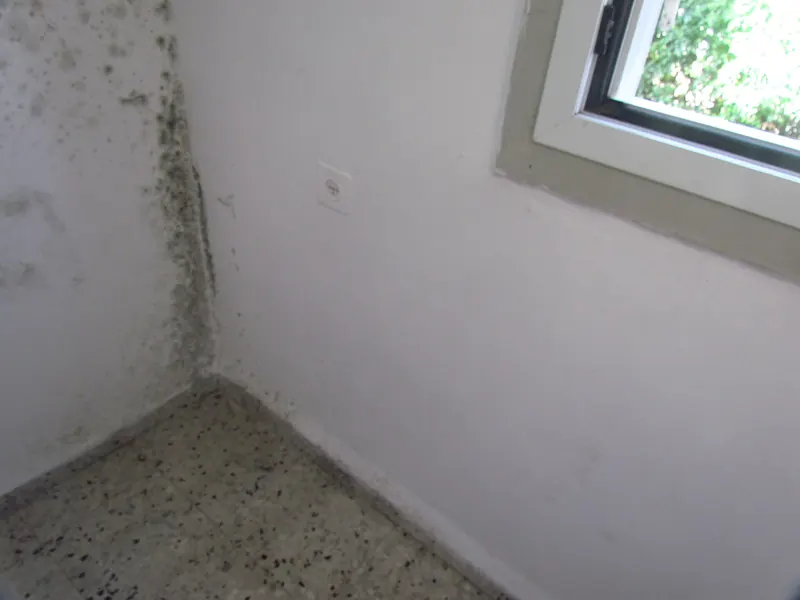
The source of a musty smell is located and treated during mold odor removal so the smell does not return.
See mold odor removalWhether growth sits on the surface or within the cavity, along with wall material, affects the removal method. Possible steps include framing cleanup and drying after moisture mapping, drywall removal, containment and HEPA filtration. Correct the leak or condensation problem before rebuilding.
You can consider mold-resistant drywall if appropriate for the room, while correcting leaks, condensation and poor ventilation separately. For a home with one, this includes the crawl space, basement or another lower level. Dry out the cavity first.
Appearance by itself cannot identify any mold species, and color does not indicate risk. Material that remains sound may be cleaned when surface growth is limited. Drywall that is soft, wet or affected through its paper facing may need removal. Do not sand or dry-brush growth.
Published national guides show different figures. Fixr lists wall mold removal at $1,000 to $12,000. This Old House lists drywall mold removal at $1,000 to $20,000, with cost data credited to Angi. Your local cost reflects repair, drying, damaged materials, containment and access.
Sometimes, but remediation and rebuilding can be separate jobs. Ask whether the scope includes new wallboard, insulation, joint finishing, primer, paint and trim. Before new material is installed, confirm who verifies a clean, dry cavity and identify who completes every repair.
Stop the moisture and avoid scraping, sanding or painting over it. An area under about 10 square feet may qualify under EPA homeowner cleanup guidance only when HVAC involvement, extensive damage and contaminated water are absent. Paper-faced drywall that is deeply affected, soft or wet often must be removed under controlled conditions.
For calm and useful guidance about wall and drywall mold removal, you can reach someone by phone 24 hours a day.