
Mold Damage Restoration
With mold damage restoration, mold is removed first, then affected drywall, floors, insulation and other materials are fixed or replaced.
See mold damage restorationMold after a fire may follow water from rain or hoses. Before repairs conceal spaces, cleanup tracks the moisture.
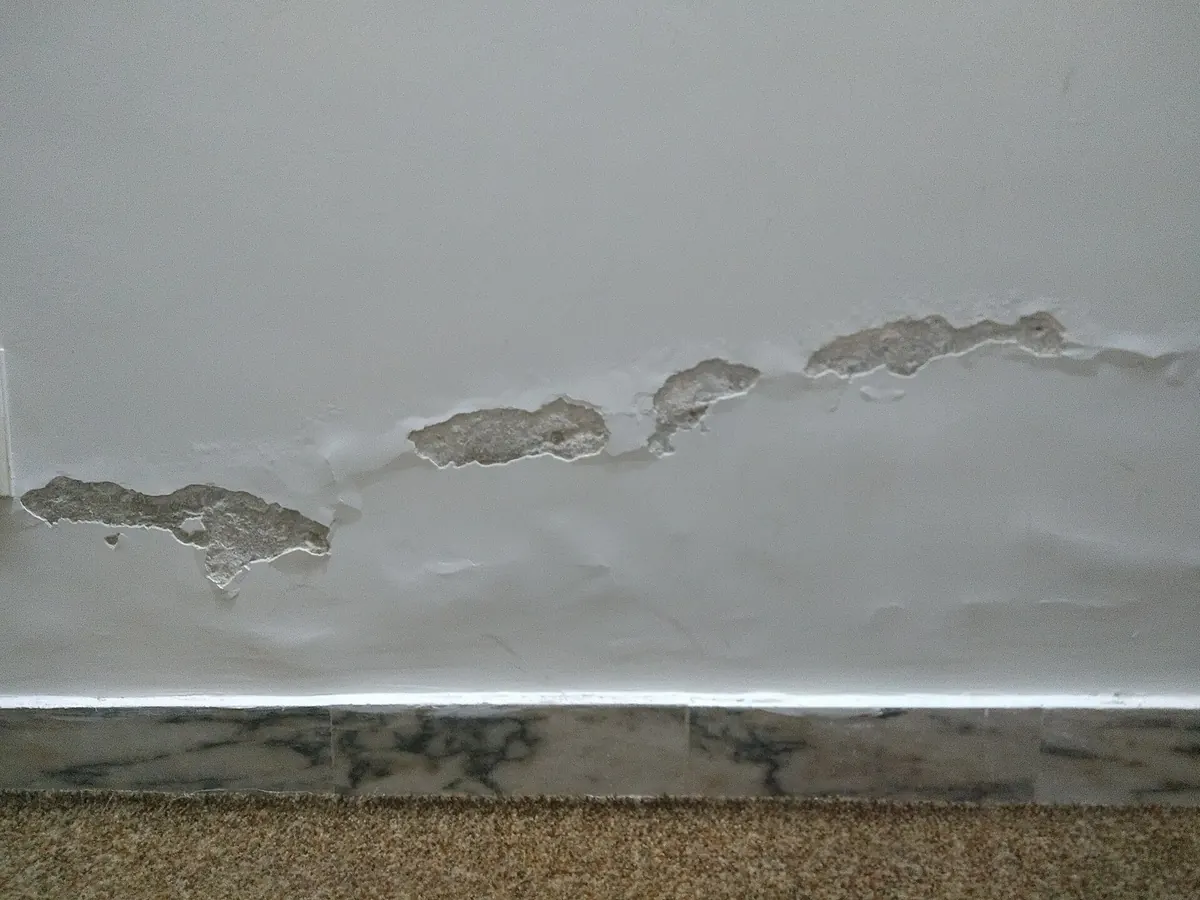
The work removes growth and addresses materials dampened by hose water, damaged plumbing or an open roof. Fire and smoke restoration is a different task.
Firefighting water may spread through an attic, flooring and wall assemblies. Wet insulation or framing can remain in spaces with minimal fire damage.
The written scope of work should distinguish drying and mold removal from board-up, rebuilding and fire restoration. The scope should name the repairs, materials and containment.
Choose an assessor independent of the removal company to conduct testing.
Separate board-up, soot work, removal, drying, repairs and rebuilding.
Get details about containment barriers, negative air pressure and the route used for waste.
Trace water in walls, the attic and lower areas such as a basement or crawl space.
Check porous building materials wherever hose water or rain traveled. Common problem areas include:
Through openings, hose water can move. Beyond the burned room, moisture readings reveal where water traveled.
Assemblies can conceal drywall and insulation that have not dried. Unsalvageable material needs controlled removal.
Moisture can persist below the subfloor, cabinets or floor covering after the top feels dry.
Attic drying follows roof protection and leak repair that prevents more rain entry.
Keep affected HVAC equipment off. Airflow can transport particles beyond the affected space.
Start with structural and fire safety. Stay out of restricted spaces, and avoid disturbing any growth.
Call (844) 352-3560There is no guide with a distinct cost for this type of fire-related work. Fixr lists $1,500 to $9,000 for typical mold remediation and $10,000 to $20,000 for severe restoration. Bob Vila lists damage repair after remediation at $2,000 to $20,000 and credits Angi and HomeAdvisor for the data. These guide prices do not represent a property-specific quote.
No site visit was used for these ranges, which are drawn from published national cost guides. Following an on-site assessment, the property price should be explained to you before any work begins.
Ask about cost: (844) 352-3560Policy language determines coverage after fire or a water event classified as sudden and accidental. Limits, maintenance issues and delays can affect payment.
Promptly report it. Find out whether the claim includes mold work and whether it has a sublimit.
Save the scope, photographs, invoices, moisture readings and clearance report. Ask before disposal.
California's Toxic Mold Protection Act includes a landlord written-disclosure section (Health and Safety Code 26147). By its own wording it applies only after the state adopts mold exposure standards, and the state health department has said it could not set them. Save fire and mold documents with records for drying and repair in case questions arise later.
Under California's housing law, visible mold found by a health officer or code enforcement officer can make a rental substandard. Renters can contact their local health or code enforcement department to ask for an inspection. Save every notice concerning growth, water, repairs and access. Local requirements and lease terms may influence who pays.
A typical job starts with assessment and ends in verification after containment, removal, cleaning and drying.
Targeted openings and a moisture meter track water across attic spaces, floors and walls.
An air filtration device and poly sheeting may be used to hold negative air pressure.
A HEPA air scrubber works with protective equipment to limit exposure as materials are removed.
When porous materials cannot be cleaned and dried, disposal may include carpet, insulation, drywall, ceiling tile.
Sound framing and non-porous surfaces are cleaned, HEPA-vacuumed and damp-wiped. No antimicrobial treatment replaces cleaning.
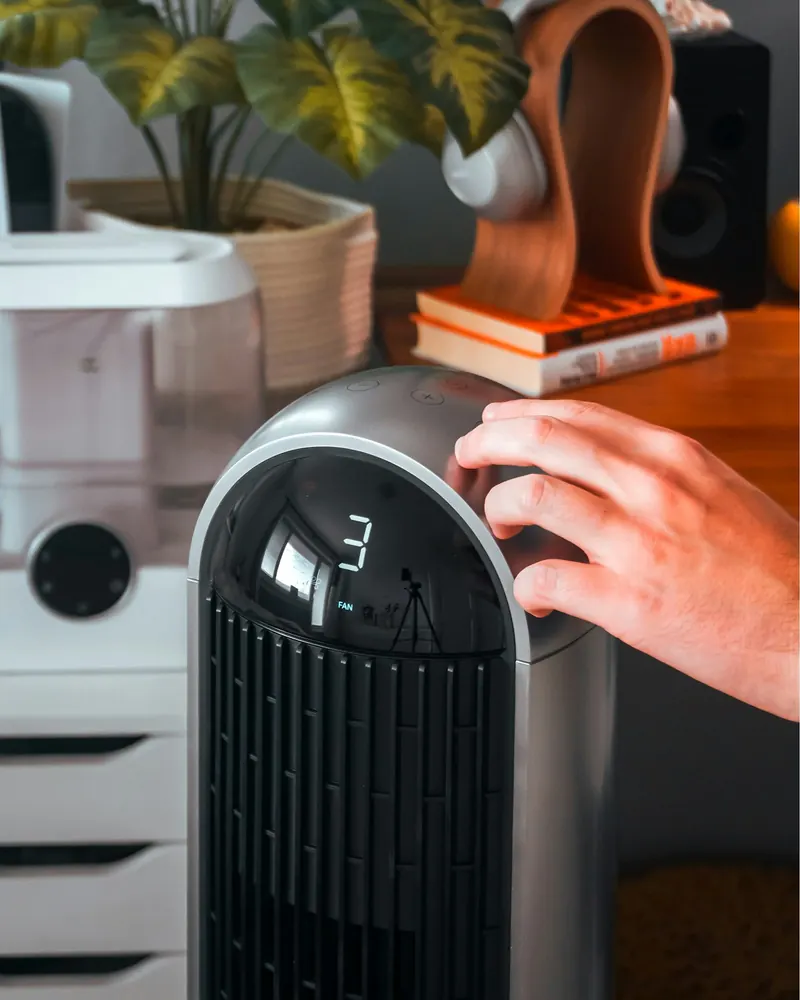
The drying process uses dehumidifiers and air movers, with moisture readings and relative humidity.
Complete final cleaning before barrier removal. Any air sampling or clearance testing should be completed by an independent assessor.

Phone at any hour. A mold after fire damage specialist takes your call, discusses what you see and outlines what comes next.
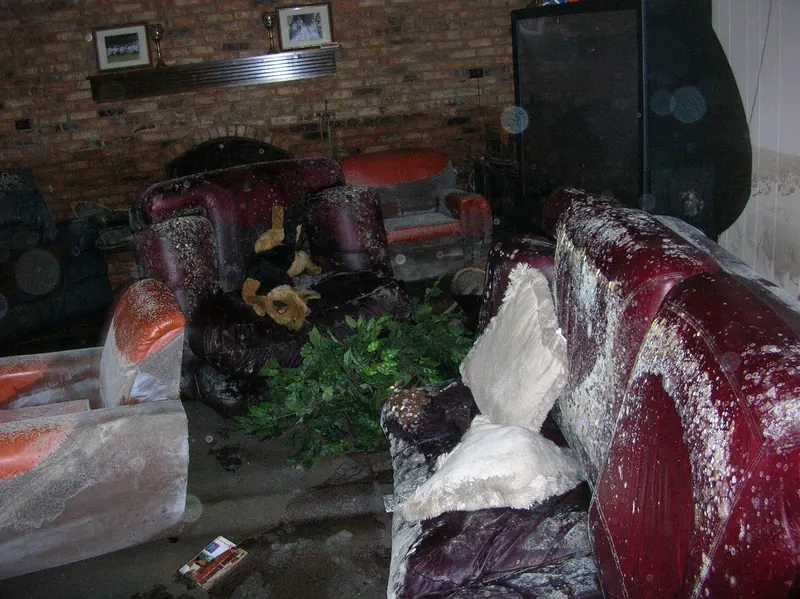
The risk is greater if water enters concealed spaces, multiple rooms, ventilation components or debris that is contaminated.
Category 1, category 2 and category 3 classifications guide material and protective-equipment decisions.
Mold can trigger allergy and asthma symptoms in some people. People with weak immune systems, asthma or lung disease are more at risk.
A HEPA air scrubber, negative air pressure and poly sheeting contain particles when walls are opened.
Dry surfaces do not prove framing, insulation or subfloor is dry. Moisture readings guide opening.
Can you clean it yourself? An area under about 10 square feet is often suitable for homeowner cleanup under EPA guidance. Contaminated water, HVAC involvement, hidden spaces and widespread damage require professional help.
Material that remains sound can stay when cleaning and drying will save it. Porous material with embedded growth often cannot.

A timeline can be set once moisture has been mapped. Wet materials, safe entry, repairs, drying and containment all affect it.
Fragrance cannot solve smoke or musty odors, even when smoke masks the musty smell. Soot calls for fire cleanup, while cleaning and moisture correction address mustiness.
EPA guidance recommends indoor relative humidity below 60 percent, with 30 to 50 percent preferred. A dehumidifier is useful, but it does not eliminate the need to correct leaks or trapped water.
California has no state license or certification for mold assessors or remediators, according to the California Department of Public Health. General construction work above a small dollar amount does need a license from the Contractors State License Board (CSLB), so it is worth checking a contractor's license there and asking about their mold training. Ask which permits apply to demolition, roof repair, electrical work and rebuilding.
Water-damaged areas and belongings should be dried within 24 to 48 hours to prevent mold growth. Correct the water problem first so growth does not return.
There is no federal limit for indoor mold levels. Material conditions and moisture findings help determine what to do.
The California Department of Public Health (CDPH) Air Quality Section publishes mold and dampness guidance and a mold FAQ. CDPH says visible mold, dampness, and mold odor are unhealthy and should be fixed, and that routine mold testing is not needed when mold is visible. Ask about rules for the property type, fire repairs and mold work.
The city and neighboring communities have access to mold after fire damage.
With mold damage restoration, mold is removed first, then affected drywall, floors, insulation and other materials are fixed or replaced.
See mold damage restoration
Water damage mold cleanup removes mold that grows after a leak or flood and dries the structure so it does not return.
See water damage mold cleanup
Containing mold growth comes first in mold remediation, followed by removal, cleaning and correction of the moisture problem that allowed it.
See mold remediation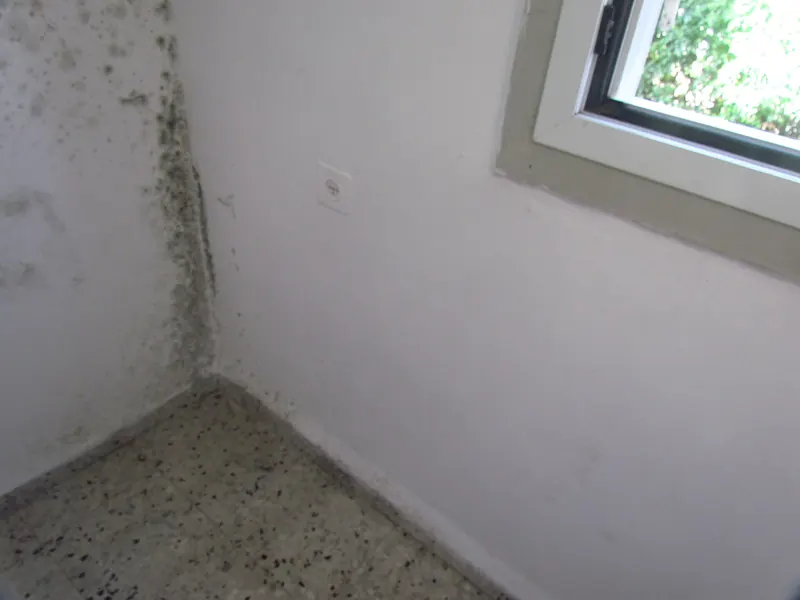
The source of a musty smell is located and treated during mold odor removal so the smell does not return.
See mold odor removal
For insulation mold removal, moldy insulation comes out of walls, attics and crawl spaces before cleaning and later replacement.
See insulation mold removal
Damaged wallboard is cut away during drywall mold removal, the interior framing is cleaned and new material replaces what was removed.
See wall and drywall mold removal
Through attic mold removal, a crew cleans insulation, roof sheathing and rafters and points out the airflow problem or leak behind the growth.
See attic mold removal
Mold clearance testing follows removal and uses a visual check plus air samples to verify that the area is clean.
See mold clearance testingAlong each route taken by firefighting water, begin with moisture mapping and a visual inspection. A moisture meter checks materials, and selective openings can show hidden wet spaces. Thermal imaging can point to temperature patterns that deserve inspection, although it cannot confirm mold alone.
Use the drying guidance instead of predicting a fixed growth time. According to EPA guidance, dry items and areas with water damage within 24 to 48 hours to prevent mold growth. What happens inside depends on temperature, material type, dampness and the conditions that existed before.
Affirmative. Growth may recur when high humidity, hidden water, damaged plumbing or open roofs are not corrected. Before rebuilding, use readings to verify dry materials after the plan corrects the moisture source. Keep the indoor relative humidity level under 60 percent.
Whether coverage applies depends on the fire loss, your policy and where the water came from. Ask whether remediation follows a covered sudden and accidental event, whether mold coverage limits apply and what documentation is required. Insurers may treat delays, neglected upkeep and continuing leaks differently.
Yes. Rain through an open roof, damaged plumbing and firefighting water can all leave damp building materials. Not every space inside walls, attics or floors is dried by fire heat and smoke. Use moisture mapping beyond the fire-damaged room to check wet drywall, cabinets, framing and insulation.
When it is safe to enter, protect wall and roof openings, correct leaks and begin the drying process. Remove standing water, then monitor damp materials with moisture readings. Keep walls open and delay new finishes until materials dry after fixing the moisture source.
Get calm, practical guidance about mold after fire damage, with calls answered 24 hours a day.